
Departments
← Back

Department for Digital, Culture, Media and Sport

Search releases and investigations →

Oversees broadcasting, the arts, sport and gambling: the four things politicians insist they have no opinions about, then issue opinions on.
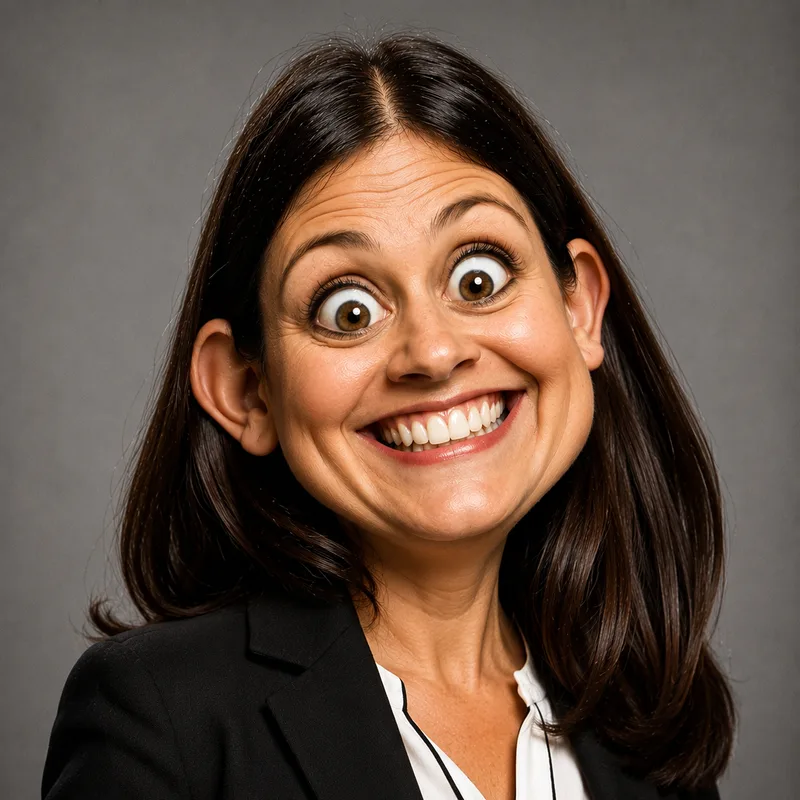
The Rt Hon Lisa Nandy MP

The Rt Hon Lisa Nandy MP

Secretary of State for Digital, Culture, Media and Sport

View bio →

The Department for Culture, Media and Sport receives 0.36 percent of all departmental spending. That single number explains most of what follows. DCMS oversees culture, sport, broadcasting, tourism, heritage, the creative industries, the digital economy, gambling regulation, media policy and civil society. Its sectors generated over £124 billion in GDP in 2022 and supported 2.4 million jobs, around 7.1 percent of the entire UK workforce. By any economic measure, these are major national assets. By the measure of how government funds and prioritises them, they are treated as optional extras.

The department's budget for 2025/26 is £2.29 billion. That is a 5.9 percent real terms cut from the previous year, at a time when overall government departmental spending rose by 5 percent. Spending per person has fallen from £48.43 in 2010/11 to £32.79 in 2025/26, a drop of 32.3 percent. This is the second successive Spending Review in which the Chancellor has cut DCMS while increasing total spending, something that had happened only once since Spending Reviews were introduced in 1998. The UK now has one of the lowest levels of government spending on culture among European nations.

Many of the sectors DCMS oversees continue to succeed despite government rather than because of it. Britain's creative industries remain globally competitive. British television, music, film, publishing and gaming command international audiences. Tourism attracts millions of visitors. British sport performs strongly at elite level. These achievements are real. The uncomfortable question is what role the department has played in creating them, and what happens when the foundations they rest on are allowed to weaken.

The foundations are weakening.

In England, 276 static libraries have closed since 2010, leaving 2,877 open. Local government revenue funding of culture and related services per person fell by 48 percent in real terms in England between 2009/10 and 2022/23. Arts Council England's core government funding fell by 18 percent over the same period. DCMS core funding of cultural organisations through grant in aid fell by 18 percent per person. The national picture remains impressive while the local foundations steadily erode. A country can have world class museums in London and closed libraries in Burnley at the same time. It does.

Sport tells a similar story. Britain celebrates elite success at Olympic Games and international tournaments. Participation rates, access to facilities and grassroots provision remain uneven. A country can produce world class athletes while struggling to provide accessible facilities for ordinary citizens. The gap between what happens on television and what happens in a local leisure centre is not a talking point. It is a policy failure measured in closed pools, reduced opening hours and vanished youth sports programmes.

Broadcasting presents another challenge. Traditional broadcasters face competition from global streaming platforms while the department has spent years failing to produce a clear long term settlement for public service broadcasting. The BBC Charter, Channel 4's ownership, the Gambling Act review, the Online Safety regime and the regulation of AI generated content all sat unresolved for extended periods while successive Secretaries of State rotated through the department.

The turnover is itself a problem. Since 2010, the department has had 12 Secretaries of State: Jeremy Hunt, Maria Miller, Sajid Javid, Karen Bradley, Matt Hancock, Jeremy Wright, Nicky Morgan, Oliver Dowden, Nadine Dorries, Michelle Donelan, Lucy Frazer and now Lisa Nandy. Several lasted less than a year. No other department of comparable importance has experienced such rapid churn. Ministers arrive, learn the brief, announce priorities, then leave before implementation begins. The permanent secretary and officials provide continuity. The political direction changes with each reshuffle.

DCMS directly funds 15 national museums and galleries, Historic England, the British Library, the British Film Institute and Arts Council England, which in turn provides core funding to nearly 1,000 further organisations. Several of these bodies are now under financial strain. The department has commissioned a review into the financial position of several of its public bodies, amid concerns that some could struggle to continue operating.

The department's broader weakness is that it has never won the argument for its own importance inside government. Culture, heritage and sport are treated as secondary concerns compared with health, education or defence. That creates a cycle where investment is limited, ambitions stay modest and long term planning becomes impossible. The creative industries contribute £124 billion to GDP. The department responsible for them receives £2.29 billion. The mismatch between what these sectors produce and what government invests in them is not subtle.

The public judges culture and sport through what they can access in their own communities. On that measure, too many people have watched facilities close, libraries disappear, youth services vanish, leisure centres reduce hours and local arts organisations fold. The department's challenge is not preserving Britain's cultural reputation. It is ensuring that reputation remains rooted in communities rather than concentrated in a handful of successful national institutions and a London postcode.

Budget · 2025/26

£13bn
Resource DEL £6.0bn · Capital DEL £6.5bn

Arts Council England, Sport England and UK Sport, museums and heritage (Tate, V&A, British Museum, the Royal Collection), public broadcasting policy framework (the BBC is licence fee funded but DCMS administers the agreement), gambling regulation and the National Lottery distributors. The film and TV production tax credits sit on the HMRC side but are larger in cash than the direct arts grant. It absorbed digital and telecoms policy from the abolished DSIT in the July 2026 reshuffle; the capital-heavy broadband and digital-infrastructure programme is what lifts its capital budget well above its historical level.

Grants · 2024-25

£1.26bn
paid in grants in 2024 to 2025, across 3,513 awards
By funding body
BodyAwardsPaid
Arts Council England1,366£549.2m
Department for Culture, Media & Sport115£414.4m
Sport England919£186.7m
UK Sport44£37.3m
National Heritage Memorial Fund230£29.7m
Historic England534£14.6m
National Citizen Service121£13.6m
British Film Institute106£11.7m
Visit Britain and Visit England78£2.0m
Largest grant schemes
National Portfolio OrganisationsArts Council England£342.3m
Youth Investment Fund - Phase 2Department for Culture, Media & Sport£170.8m
Music Education Hub FundingArts Council England£98.6m
ALB-Sport England-Football Facilities Investment 2024/5Sport England£78.9m
Commonwealth Games Legacy Enhancement FundDepartment for Culture, Media & Sport£53.4m
Listed Places of Worship Grant Scheme 2022 - 2025Department for Culture, Media & Sport£42.0m
ALB-Sport England-System Partner Investment 2022-27Sport England£34.6m
PFI Grants to Local Authorities Paid via MHCLGDepartment for Culture, Media & Sport£28.9m
Investment FundsArts Council England£25.0m
ALB-Sport England-Lionesses Futures Fund 2024-25Sport England£25.0m
Largest individual awards
RecipientSchemePaid
Social Investment BusinessYouth Investment Fund - Phase 2Department for Culture, Media & Sport£168.7m
The Football FoundationALB-Sport England-Football Facilities Investment 2024/5Sport England£78.9m
West Midlands Combined AuthorityCommonwealth Games Legacy Enhancement FundDepartment for Culture, Media & Sport£53.4m
Name not publishedListed Places of Worship Grant Scheme 2022 - 2025Department for Culture, Media & Sport£42.0m
The Football FoundationALB-Sport England-Lionesses Futures Fund 2024-25Sport England£25.0m
Royal Opera House Covent Garden FoundationNational Portfolio OrganisationsArts Council England£22.3m
The Federation of Groundwork TrustsVCSE Energy Efficiency SchemeDepartment for Culture, Media & Sport£21.8m
UK Sports InstituteHigh Performance System Partner Funding 2024/25UK Sport£18.1m
SOUTHBANK CENTRE LIMITEDNational Portfolio OrganisationsArts Council England£16.8m
Royal National TheatreNational Portfolio OrganisationsArts Council England£16.2m
The Royal Shakespeare Company, Stratford-upon-AvonNational Portfolio OrganisationsArts Council England£15.3m
OPERA NORTH LIMITEDNational Portfolio OrganisationsArts Council England£10.7m
Scottish Football Association (SF)MULTI-SPORT GRASSROOTS FACILITIES PROGRAMME 22-25Department for Culture, Media & Sport£10.1m
Manchester International FestivalNational Portfolio OrganisationsArts Council England£9.9m
British CouncilCultural Protection Fund DCMS/ AHRC Urgency Grants Mechanism Cultural Heritage and Natural DisastersDepartment for Culture, Media & Sport£8.5m
SportsAidALB-Sport England-Diploma in Sporting Excellence Funding 2022-25Sport England£8.4m
BIRMINGHAM ROYAL BALLETNational Portfolio OrganisationsArts Council England£8.0m
Football Association of WalesMULTI-SPORT GRASSROOTS FACILITIES PROGRAMME 22-25Department for Culture, Media & Sport£7.4m
TNLCFMillion Hours FundDepartment for Culture, Media & Sport£7.0m
ENGLISH NATIONAL BALLETNational Portfolio OrganisationsArts Council England£6.0m

Source: Cabinet Office, Government grants register 2024 to 2025(official statistics, published on GOV.UK). Includes grants paid by the department and the agencies and bodies it funds. Amounts are what was paid out in the financial year. Government withholds some recipients’ names for sensitivity reasons, and grants to individuals are not named here.

Agencies & Arm's Length Bodies (5)

  • Building Digital UK (BDUK)

    Building Digital UK (BDUK) is helping to bring fast and reliable broadband and mobile coverage to hard to reach places across the UK - transforming people’s lives and driving economic growth.

  • Government Digital Service (GDS)

    We are the digital centre of government. We serve the public, central government departments and the wider public sector. GDS is part of the Department for Digital, Culture, Media and Sport .

  • Office for Digital Identities and Attributes (OfDIA)

    The Office for Digital Identities and Attributes enables the use of trusted digital identity services in the UK. OfDIA is part of the Department for Digital, Culture, Media and Sport .

  • The Charity Commission

    We register and regulate charities in England and Wales, to ensure that the public can support charities with confidence. The Charity Commission is a non ministerial department.

  • The Queen Elizabeth Memorial Committee (QEMC)

    The Queen Elizabeth Memorial Committee is a joint body set up to advise the Government and the Royal Household on the national memorialisation of Her late Majesty Queen Elizabeth II QEMC is part of the Department for…

Press Releases (20)

  1. £17 million to boost skills and diversity in AI jobsDepartment for Digital, Culture, Media & Sport · 15 Nov 2023
  2. 2,500 new places on artificial intelligence and data science conversion courses now open to applicantsDepartment for Digital, Culture, Media & Sport · 15 Nov 2023
  3. Bold plan to protect long-term future of English footballDepartment for Digital, Culture, Media & Sport · 22 Feb 2023
  4. Karen Carney appoints expert panel to support major review of women's football, launched by UK GovernmentDepartment for Digital, Culture, Media & Sport · 14 Feb 2023
  5. National moment of silence to mark one year of Russian invasion of UkraineDepartment for Digital, Culture, Media & Sport · 14 Feb 2023
  6. Former Lioness Jill Scott opens hometown football pitch named in her honourDepartment for Digital, Culture, Media & Sport · 10 Feb 2023
  7. Ancient Egyptian limestone relief of female musicians at risk of leaving UKDepartment for Digital, Culture, Media & Sport · 23 Jan 2023
  8. Coronation weekend celebrations that will bring communities together announcedDepartment for Digital, Culture, Media & Sport · 21 Jan 2023
  9. Barclays Eagle Labs chosen to help turbocharge next generation of UK tech starsDepartment for Digital, Culture, Media & Sport · 20 Jan 2023
  10. Ancient Egyptian sculpture at risk of leaving UKDepartment for Digital, Culture, Media & Sport · 19 Jan 2023
  11. Birmingham 2022 contributes £870 million to UK economyDepartment for Digital, Culture, Media & Sport · 17 Jan 2023
  12. Inaugural Meeting of U.S.-UK Comprehensive Dialogue on Technology and DataDepartment for Digital, Culture, Media & Sport · 12 Jan 2023
  13. Millions of homeowners and tenants to get better access to faster broadbandDepartment for Digital, Culture, Media & Sport · 6 Jan 2023
  14. Channel 4 to remain publicly owned with reforms to boost its sustainability and commercial freedomDepartment for Digital, Culture, Media & Sport · 5 Jan 2023
  15. A Christmas gift for the nation as Peruzzi’s The Nativity savedDepartment for Digital, Culture, Media & Sport · 24 Dec 2022
  16. Winners of the special Queen Elizabeth II Platinum Jubilee Volunteering Award announcedDepartment for Digital, Culture, Media & Sport · 21 Dec 2022
  17. UK tech sector retains #1 spot in Europe and #3 in world as sector resilience brings continued growthDepartment for Digital, Culture, Media & Sport · 21 Dec 2022
  18. UK to accelerate research on 5G and 6G technology as part of £110 million telecoms R and D packageDepartment for Digital, Culture, Media & Sport · 13 Dec 2022
  19. Jermaine Jenas, Myleene Klass, Georgia Kousoulou amongst public figures backing Online Safety BillDepartment for Digital, Culture, Media & Sport · 9 Dec 2022
  20. New rules for apps to boost consumer security and privacyDepartment for Digital, Culture, Media & Sport · 9 Dec 2022

Contact