
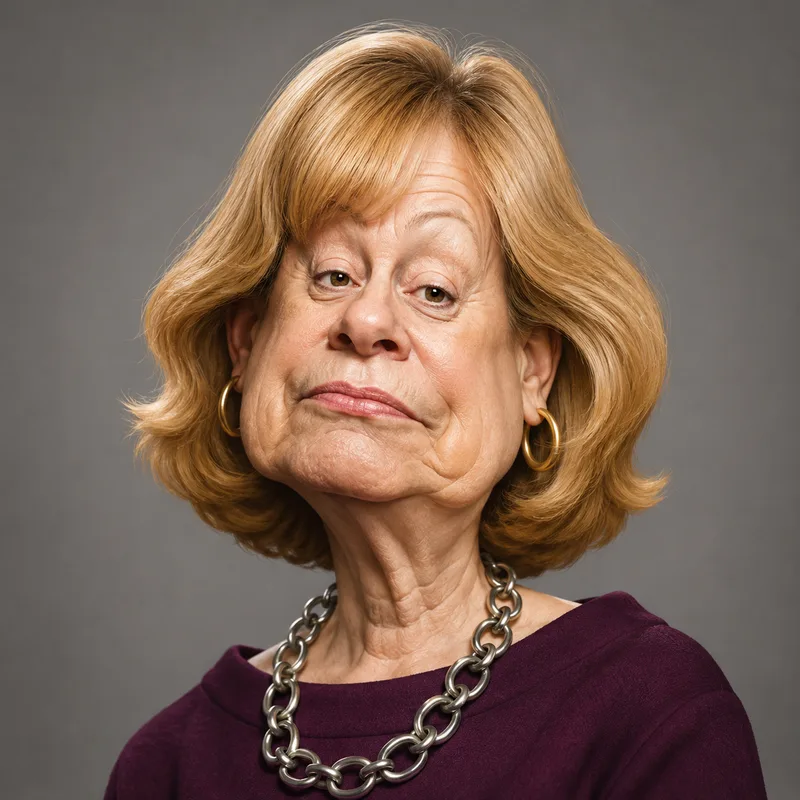

Political Biography
Angela Smith first acquired political weight by winning Basildon in Labour's 1997 landslide. The seat had become a symbol of the voters Tony Blair needed to attract, giving her victory significance beyond that of a new backbencher. Ministerial experience in Northern Ireland and as Gordon Brown's parliamentary private secretary established her as a dependable party operator rather than an independent policy entrepreneur.
Her Commons career ended when she lost South Basildon and East Thurrock in 2010, but she entered the Lords two months later. Labour peers elected her their leader in 2015, giving her a mandate separate from the party leader's patronage. During Labour's 2016 civil war, she and chief whip Steve Bassam stopped attending Jeremy Corbyn's shadow cabinet without resigning their elected Lords positions. They returned after four months to concentrate on parliamentary scrutiny.
Smith was openly more comfortable with Keir Starmer, praising his leadership as focused and professional while describing the Corbyn years as lacking a shared sense of purpose. Starmer made her Leader of the House of Lords, and Lord Privy Seal, in July 2024. Her position survived his departure: Andy Burnham retained her in July 2026, evidence that her usefulness was not confined to one leader's faction.
What she stands for
Smith belongs to Labour's institutional, governing tradition. She values party discipline, parliamentary negotiation and reforms that can survive contact with the existing constitution. Her conduct under Corbyn showed that her loyalty has limits, but also that she prefers controlled institutional pressure to resignation or public campaigning.
On Lords reform, she has consistently argued that hereditary membership and an unlimited chamber are indefensible. Before taking office, however, she warned Labour to be honest about what it could achieve and rejected the idea of simply overwhelming opponents with 100 new Labour peers. She favoured changes to size and appointments while expressing doubts about an immediate move to a wholly elected chamber. That makes her a reformer, but an incremental one.
What she actually delivered
Smith's clearest result was the House of Lords (Hereditary Peers) Act 2026. Removing the remaining hereditary members was a Labour manifesto commitment and therefore not her personal invention. Her responsibility was to carry it through a chamber whose own composition it directly threatened and in which Labour lacked a majority.
The legislation completed the work left unfinished by the 1999 compromise. It received Royal Assent in March 2026 and, from 29 April, the remaining hereditary peers could no longer sit and vote simply because of an inherited title. Smith was therefore entitled to call its passage a substantial constitutional step. The Act ended the hereditary entitlement itself, not merely the by-election system.
What remained unfinished
Labour also promised a retirement age, a meaningful participation requirement, stronger removal powers and reform of appointments. The Retirement and Participation Committee reported on 15 July 2026, recommending that an age limit of 80 should be phased in between 2029 and 2034 and that peers should attend at least 20 per cent of sitting days across two sessions. By 29 July, these were recommendations rather than completed reforms.
The government also weakened its argument for a smaller chamber by continuing to create life peers. The hereditary reform ended the exemption that had allowed up to 92 hereditary members to sit, but only 77 were removed when it took effect. Twenty-nine hereditary members received life peerages, allowing them to remain or return. The hereditary entitlement ended, but much less changed in the chamber's actual membership than the headline suggested.
Capability
Smith has proved herself an effective parliamentary manager. She maintained authority among Labour peers through three very different party leaderships and negotiated a constitutionally significant bill through a chamber with both the numbers and personal incentive to resist it. Her strongest abilities are political and procedural, not administrative.
Her limits are equally clear. The reform she completed was narrower than Labour's wider promise, took substantial concessions and left an appointed chamber of roughly 800 members intact. Smith deserves credit for ending hereditary entitlement, a lasting change that had defeated governments for more than two decades. Her record supports her reputation as a skilled operator and incremental reformer, but not as the architect of a democratic replacement for the Lords.